










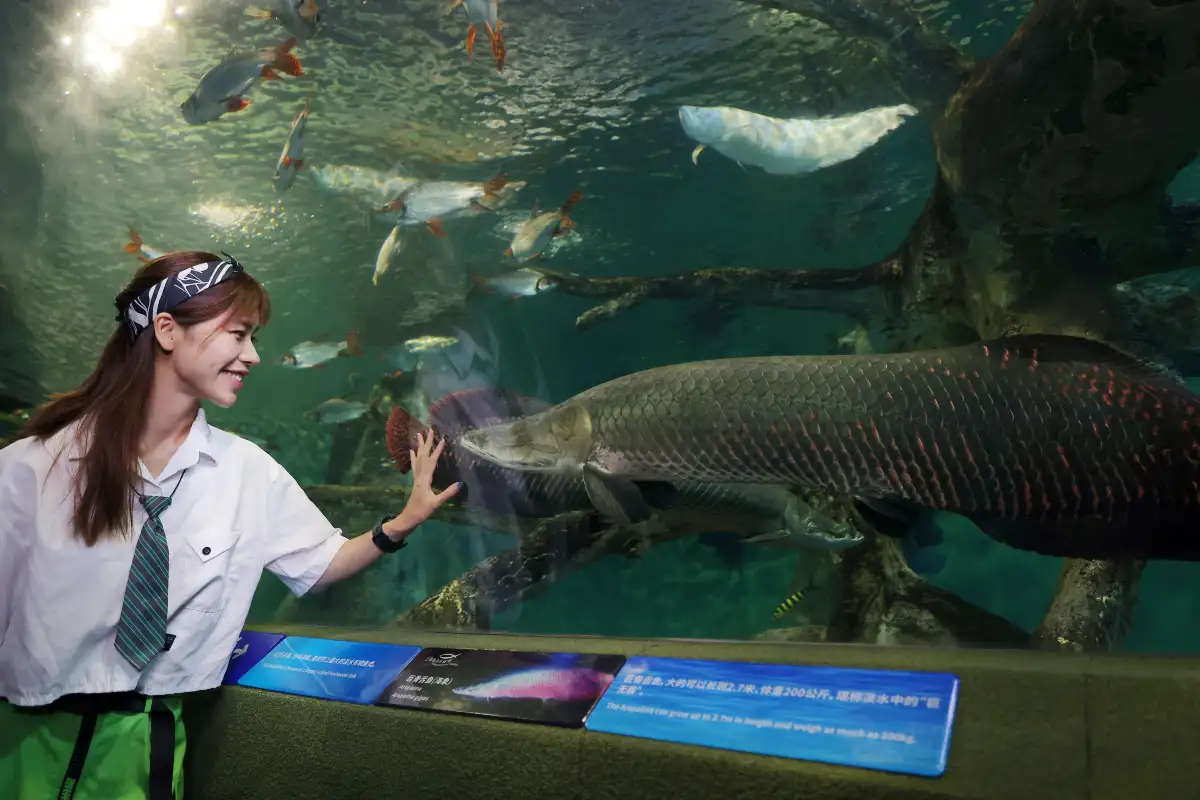
There is exactly one aquarium on Earth with a dedicated China Zone, and you are already planning to walk through it. The China Zone at the Shanghai Ocean Aquarium gathers endemic Chinese aquatic species that visitors will not find grouped together in any other collection: the Chinese sturgeon that conservationists at home call the giant panda of the river, plus the Chinese sucker fish, the Yangtze alligator, the Chinese giant salamander and the Jinsha carp (Percocypris pingi). On our visits we treat it as the intellectual heart of the aquarium – a river system’s story told with live animals – and it is the zone we tell international travelers to see first. This guide covers why the zone is unique, the five species to find, how the Yangtze story is told, where the zone sits on the route, and how to bring it alive for kids.
ประเด็นสำคัญ
- The world’s only China Zone – a dedicated hall for endemic Chinese aquatic species, many nationally protected.
- Five species to find – Chinese sturgeon, Chinese sucker fish, Yangtze alligator, Chinese giant salamander, Jinsha carp.
- A river in numbers – the Yangtze basin supports more than half of China’s aquatic species, including 300-plus fish species.
- It opens the route – the zone is the first stop on the aquarium’s single downhill walk.
- Give it time – the whole visit runs 2–3 hours, and this hall rewards the slowest reading of any zone.
คำตอบด่วน: the China Zone is the Shanghai Ocean Aquarium’s signature hall and the only one of its kind worldwide, showcasing endemic Yangtze species led by the Chinese sturgeon – the “giant panda of the river”. It is covered by standard admission; adult e-tickets start เริ่มต้นที่ $23.23 บน Trip.com.
Why this zone is unique
Most aquariums arrange their tanks by geography or habitat – a reef here, an Amazon river there. The Shanghai Ocean Aquarium does that too across its nine themed zones, but it also does something no other aquarium in the world does: it dedicates an entire zone to China’s own aquatic life. The China Zone showcases endemic Chinese species, and many of them are nationally protected, so the hall reads less like a display and more like a conservation case file.
That framing is not marketing gloss. The animals inside are species most international visitors have never seen in any aquarium, because they are not the usual globe-trotting collection – they belong to one river system, and this is the one aquarium built to introduce them. On our visits, the zone reliably produces the question we hear most from travelers: “what is that fish?” The answer usually comes with a conservation story attached.
The aquarium’s broader credentials back the ambition: it is a National 4A Tourist Attraction, a national science education base, and it hosted the 7th International Aquarium Congress in 2008. The China Zone is the exhibit those credentials were earned for.
The five species to find
Five named species anchor the zone, and finding all five turns the visit into a proper treasure hunt. Here is the cast, and what to look for in each.
| Species | What to look for |
|---|---|
| Chinese sturgeon | The flagship, nicknamed the “giant panda of the river” – the heaviest conservation story in the building. |
| Chinese sucker fish | A Yangtze endemic that most visitors are meeting for the first time – part of the river’s less famous cast. |
| Yangtze alligator | A living reptile of the river system, and a reminder that the Yangtze story is not only a fish story. |
| Chinese giant salamander | The zone’s amphibian, and one of the more surprising faces for visitors expecting only fish. |
| Percocypris pingi (Jinsha carp) | The carp most visitors have never heard of, and a good trivia answer for the flight home. |
Several of these species are nationally protected in China, and the aquarium presents them accordingly, with the sturgeon carrying the most weight. Our Chinese sturgeon guide goes deeper on the flagship – its nickname, its protected status and how to get the most from the encounter.
Reading the Yangtze story
The numbers behind the zone explain why it exists. According to the aquarium’s official framing, the Yangtze basin supports more than half of China’s aquatic species, including over 300 fish species. One river system, in other words, holds a major share of a national fauna – and most of it stays invisible to visitors until an exhibit like this puts names and faces to it.
We read the hall as a story in three acts: the river’s giant (the sturgeon), its endemic characters (the sucker fish and the Jinsha carp), and its reptiles and amphibians (the alligator and the salamander). The interpretive layer – themed educational presentations and the guided talk sessions the aquarium runs across its zones – fills in the conservation context if you give it a few extra minutes.
จากทริปจริง: on a recent visit we watched a guided talk in the China Zone outlast its scheduled crowd, because the presenter kept fielding questions about the sturgeon. If your travel style rewards depth over distance, this is the hall to slow down in.
How the zone fits the route
The China Zone opens the route. The aquarium is laid out as one gentle downhill walk through nine themed zones, starting with China and ending at the 155-meter underwater tunnel in the Deep Ocean zone. The order is doing narrative work: you meet the local river first, then travel outward – South America, Australia, Africa, Southeast Asia – before the route turns cold, polar and finally oceanic.
Practically, this placement means the zone sees the freshest crowds of the day. Arrive near the 09:00 opening and you will often have the sturgeon tank in a calm moment; arrive at midday and the hall carries the full weight of incoming traffic. It also means there is no reason to “save” the China Zone for later – it is the first door on the walk.
Slow-start tip: budget your best attention for this first hour rather than the tunnel. The zone is quietest at opening, and the species here reward reading time in a way the showier halls downstream do not require.
Bringing it alive for kids
The China Zone is a classroom by design, and the aquarium treats it that way – it holds national science education base status and runs education programs including the DIDI Classroom and school and community outreach. For visiting families, the trick is to give kids a mission rather than a lecture.
- Run a five-species scavenger hunt – sturgeon, sucker fish, alligator, salamander, carp; check off all five before leaving the hall.
- Lead with the nickname – “giant panda of the river” is a hook children grasp instantly, and it opens the conservation conversation.
- Pair it with a feeding session – five interactive sessions run daily, with the day’s schedule posted at the entrance.
- Save questions for the talks – the guided talk sessions are built for questions, and a spoken answer lands better than any sign.
If the whole family is traveling, our family guide covers the rest of the aquarium from a kid’s-eye view, from the stroller-friendly downhill route to the penguin halls further down the descent.
คำถามที่พบบ่อย
Is the China Zone at Shanghai Ocean Aquarium worth visiting?
It is the reason many visitors choose this aquarium over others in Shanghai. It is the world’s only dedicated China Zone, and its endemic species – including the Chinese sturgeon – do not appear together in any other collection.
What animals live in the China Zone?
Five named species anchor the hall: the Chinese sturgeon, Chinese sucker fish, Yangtze alligator, Chinese giant salamander and Percocypris pingi, known as the Jinsha carp. Many of them are nationally protected in China.
Why is the Chinese sturgeon called the giant panda of the river?
The nickname reflects the species’ status inside China: a large, iconic river animal carrying the same conservation weight on water that the panda carries on land. The aquarium presents it as the flagship of the China Zone.
Where is the China Zone on the aquarium route?
It is the first zone on the single downhill route, which runs through nine themed zones and ends at the underwater tunnel. Arriving near the 09:00 opening gives you the calmest window in the hall.
How long should we spend in the China Zone?
The aquarium recommends 2–3 hours for the whole visit. We would give the China Zone a deliberate, unhurried share of that time – it rewards slower reading than any other hall on the route.
Book your visit to the world’s only China Zone
Meet the giant panda of the river
An instant-confirmation e-ticket with QR-code entry gets you onto the downhill route without a counter queue.
From here, the natural next steps are our Chinese sturgeon guide, which profiles the zone’s flagship in depth, and our nine-zone route guide, which shows how China leads into the rest of the descent. Families should keep our คู่มือครอบครัว open while planning, and our highlights list is a quick sanity check on the unmissables before you book. The zone is the first door on the route – arrive early and walk straight in.
แหล่งที่มา
- China Zone species list, protection framing and Yangtze ecology figures per the official Shanghai Ocean Aquarium English-language site, checked October 2026.
- National 4A status, science education base designation and the 2008 International Aquarium Congress from the aquarium’s official profile materials.
- Hours, admission cutoff and e-ticket pricing from the Trip.com partner listing, checked October 2026.
- On-site verification by our editorial team during 2025–2026 visits, including China Zone talk sessions and posted feeding schedules.
